
Dusk in Al Aïn. I am preparing my passport to exit Oman and enter the UAE. Traffic is fluid as I arrive at the downtown customs checkpoint. But the nice Omani policeman (all Omani are nice) hands me a paper and explains me that I have to make a U-turn. This checkpoint is for GCC members only. Seems like I have to drive 30 km and enter UAE from the south of the city.
My 3-day weekend in Oman is still sinking in. The thick walls of Nizwa protecting their guests from the 45°C scorching heat. The 1000-meter deep canyon at Jebel Shams. The 100-million-year-old deeply subducted eclogite rocks at Jebel Sifah. The swim in the emerald waters of Bummah sinkhole. And the people. Always ready to help, smiling and curious.
Great. My phone has no signal, it is dark and I forgot my night driving glasses. Let’s follow some UAE trucks and pay attention to road signs. We’ll manage.
I couldn’t leave Oman without paying a visit to Oman LNG, a facility that has been steadily delivering volumes to Asia and Europe, bringing wealth to the country. Based on the excellent roads, Sultan Qaboos and his successor spent the money well.
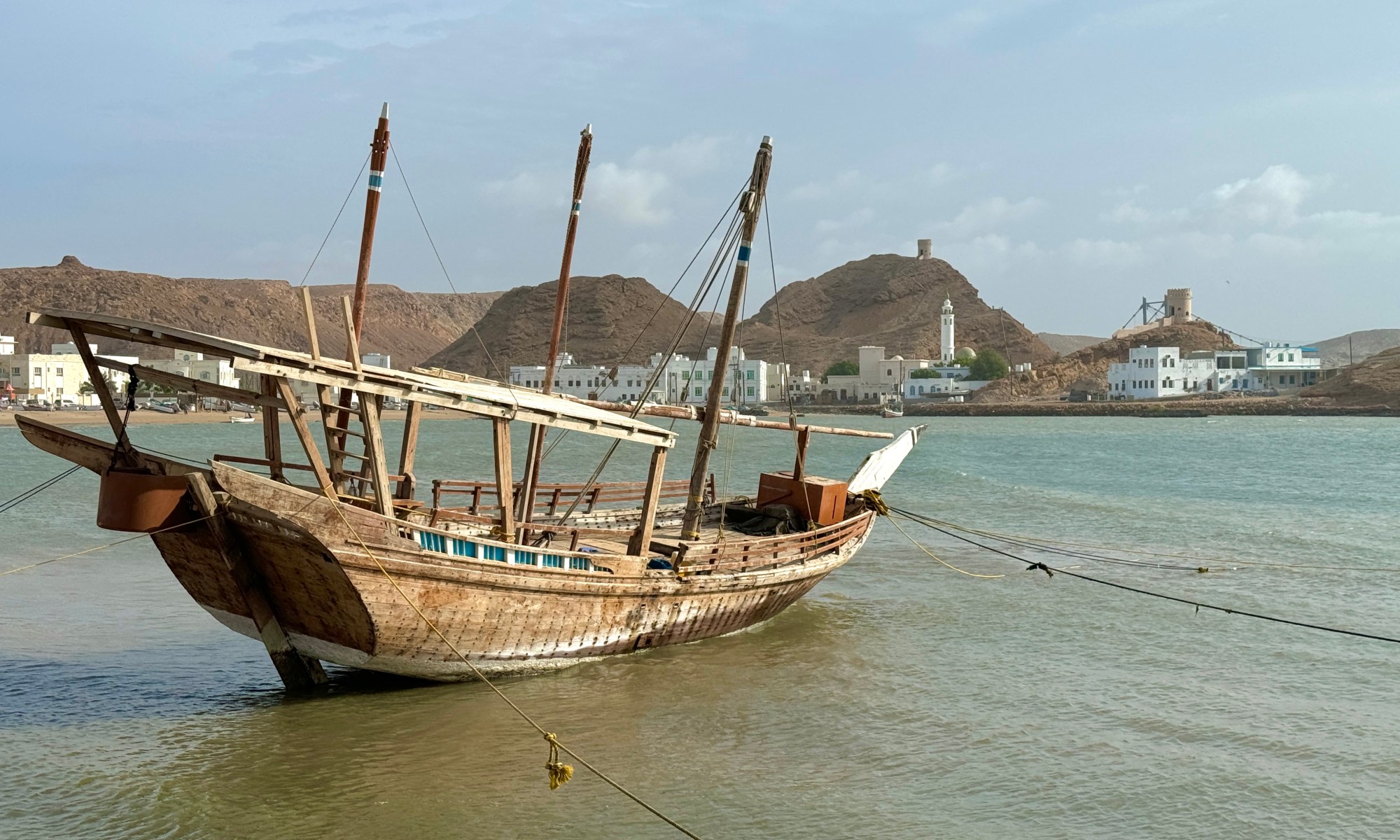
The plant can be seen from the expressway, with its distinct flare (yes we must work on this) and huge buildings against the turquoise blue waters of the Indian Ocean. The closest city is Sur, a beautiful bay where dhows are waiting for the next fishing campaign. A good place to have seafood.
On the fast E22 freeway to Abu Dhabi, speed limit is 160 km/h (100 mph). I am back into another world, it seems I leapfrogged half a century. Oman has a strict policy on its building heights and colors. Emirates obviously don’t. Same land, different views, both fascinating.
Photo: Sur, Oman – © Jean Heintz 2024
 Wideangle LNG