
Since industrial revolution, and especially after the demographic boom, mankind had to suffer a number of severe (energy-related) industrial disasters. Where do we stand since 1960 ?
This is not an easy question. All disasters are tragedies. Some are instant, some are a slow pain. I decided to focus on single, industrial disasters (unlike Global warming, Pacific Garbage Patch, Amazon fires or Aral Sea). I took largest events by segment (several large oil spills ignored, I chose chemical and hydro disasters instead). Finally, I decided to sort them by chronological order because all were gruesome in their own way.
Top 15 industrial disasters since 1960
1. Laobaidong, China (1960 – Coal)
2. Vajont, Italy (1963 – Hydro)
3. Banqiao, China (1975 – Hydro)
4. Seveso, Italy (1976 – Chemical)
5. Bhopal, India (1984 – Chemical)
6. Chernobyl, Ukraine (1986 – Nuclear)
7. Piper Alpha, UK (1988 – Oil platform)
8. Exxon Valdez, USA (1989 – Oil tanker)
9. Oil Fires, Kuwait (1991 – Oil wells)
10. AZF, France (2001 – Ammonium nitrate)
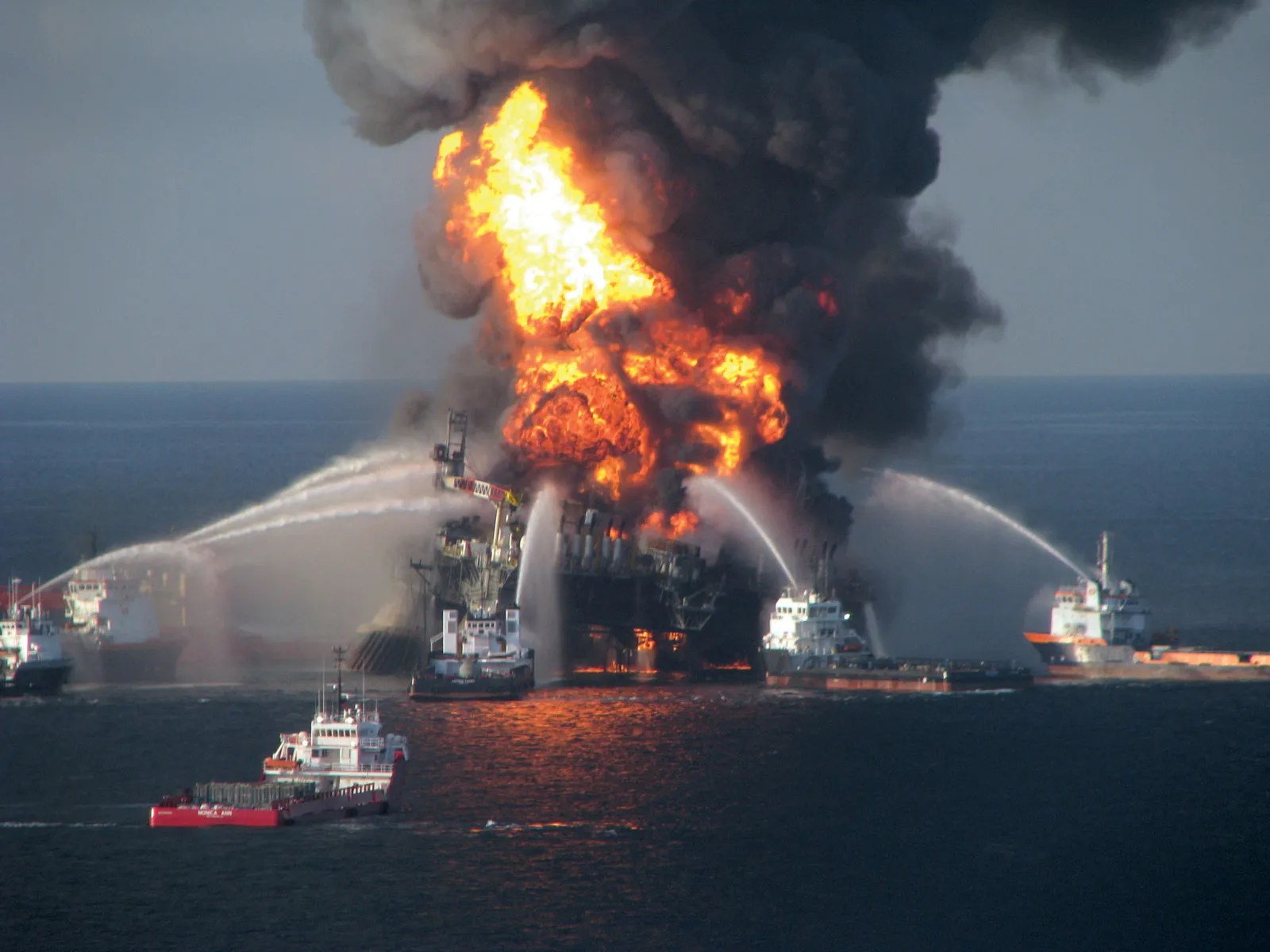
11. Deepwater Horizon, USA (2010 – Oil platform)
12. Fukushima, Japan (2011 – Nuclear)
13. Mariana, Brazil (2015 – Metals)
14. Beirut, Lebanon (2020 – Ammonium nitrate)
15. Derna, Libya (2023 – Hydro)
My takeaways and thoughts :
– LNG is a safe industry. Worst accident I can think of was Skikda, Algeria in 2004 (40 victims).
– Most disasters belong to the 70’s and 80’s. Safety and security made serious progress.
– Casualties to be compared to global population (3 bn in 1960 vs. 10 bn today).
– There is inevitably a shift along the energy transition, as new commodities emerge.
– Regardless of disasters being local, accountability remains global – in a globalised world.
– We grow up with a cognitive bias depending on where we live.
New technologies will always face risks. #Decarbonization won’t be an exception to the rule.
No energy is 100,0% safe except the one we don’t produce.
Picture : BP Deepwater Horizon, 2010.
 Wideangle LNG